Leading this month
Over the last two years, Moscow-Sukhumi ties have undergone an unprecedented period of turmoil amid Russian efforts to reshape its relationship with Abkhazia — and curtail local sovereignty.
What began as opposition to a set of pro-Russian policies has morphed into a protracted crisis in bilateral relations. Moscow’s aggressive response — and its dogged pursuit of interests diametrically opposed to those of Abkhazia — highlights the Kremlin’s evolving approach towards its near abroad.
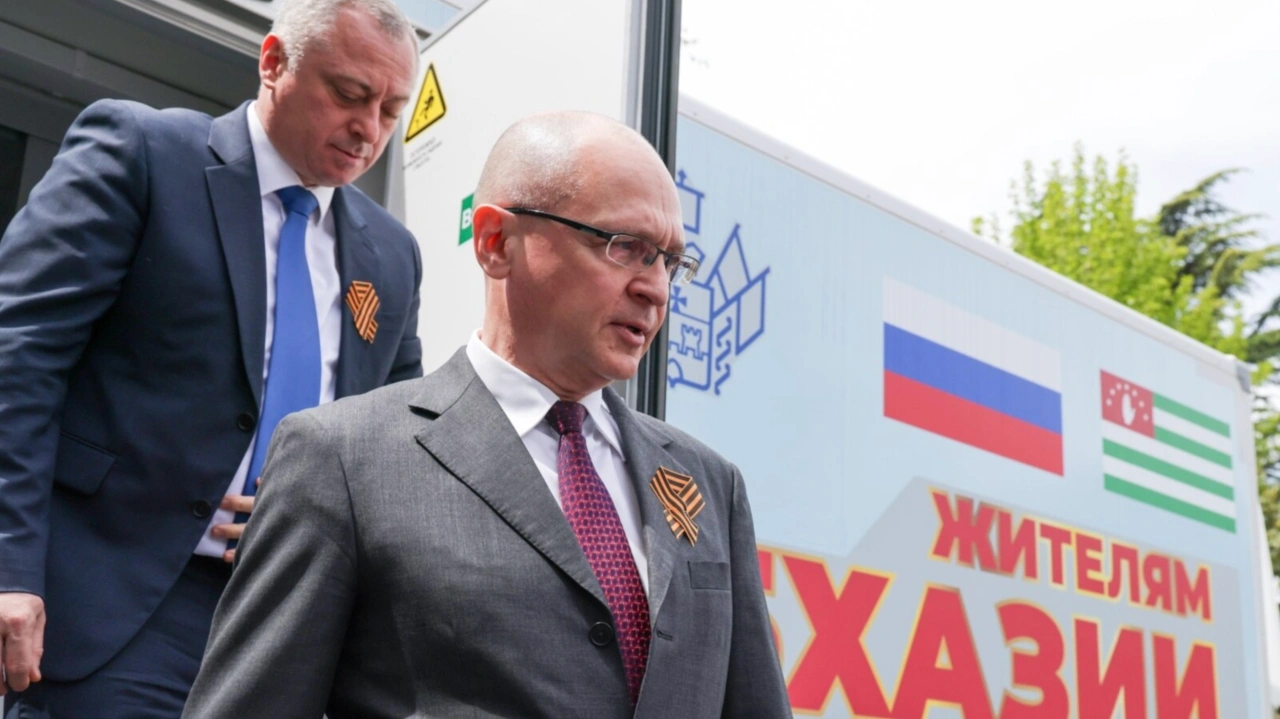
To impose calm on the Abkhazian front, Moscow has leaned on a pair of reliable figures — recently elected Abkhaz President Badra Gunba and Sergey Kiriyenko, a top Kremlin official overseeing parts of the South Caucasus. Together, they have sought to restore a facade of normalcy to official ties. But despite their best efforts, resentment and resistance continue to simmer beyond the corridors of power.
To curtail resistance, the Kremlin and its local allies launched a sustained crackdown across pro-sovereignty circles. Russian authorities have hounded several prominent opposition figures, revoking their Russian citizenship and branding them as foreign agents. Most recently, Moscow placed Abkhaz politicians Kana Kvarchia, Eshsou Kakalia and Khina Dumaa on its federal most-wanted list on bogus robbery charges. (The alleged victims were Russian political strategists deployed to Sukhumi ahead of the municipal elections.) Russia has also restricted Abkhazia’s engagement with diaspora communities.
(Armenian authorities are pursuing a similar scorched-earth campaign against opposition elements, aimed at consolidating domestic control and advancing a policy of appeasement vis-à-vis Azerbaijan.)
With the opposition partially subdued, Moscow is moving to extract value from Abkhazia, particularly as a hub for economic activities. According to reports, Abkhazia has increasingly become a node in Russian sanctions-evasion networks. Russia is also the driving force behind the controversial Inguri Terminal — a recently constructed, yet-to-be-used logistics corridor on the Abkhazia-Georgia border. Experts believe the terminal aims to expand Moscow’s capacity to skirt sanctions and access foreign markets via Georgia. (Despite feverish speculation, Tbilisi has yet to confirm its participation.)
Against this backdrop, Russia continues to make inroads in Georgia via the ruling Georgian Dream party. Over the past year, Tbilisi has veered sharply from its pro-Western orientation while deepening engagement with Moscow. (A recent leak exposed Georgia’s increased dependence on Russian energy imports.)
With the Georgian street largely tamed, observers speculate that Moscow will press ahead with efforts to accelerate Georgia’s integration into its orbit, likely advancing regional infrastructure schemes as part of this push — including the Inguri Terminal and the resumption of Georgia-Russia railway links via Abkhazia.
And herein lies Russia’s motivation to accelerate regional integration and prop up artificial peace (i.e., Armenia-Azerbaijan normalization). Whether in Abkhazia or elsewhere, Moscow’s approach is a calculated gambit to consolidate the region’s geopolitical order in its favor, while expanding wartime economic resilience. If these ambitions run afoul of erstwhile partners — Abkhazia and Armenia — so be it.
What we are watching
Dead in the water. Following Armenia’s loss in the 2020 Nagorno-Karabakh War, Armenian authorities pledged sweeping reforms. In recent years, this much-heralded defense overhaul included planned operational reforms, strategic assessments and increased military spending. (According to a well-placed source, despite higher military allocations, these funds were often not fully spent or were diverted away from core defense expenditures.)
Now, amid a dash to appease Azerbaijan, Armenia’s already spurious efforts to rebuild its armed forces appear effectively stalled. In September, Armenia’s Prime Minister Nikol Pashinyan sparked controversy by stating that military power should be “the least important” tool for ensuring the country’s security. (This unorthodox opinion runs counter to longstanding national security thinking, which holds that robust military capabilities are essential for deterrence — and peace.) The Armenian government also reduced the 2026 defense budget by over 15 percent. (In comparison, Azerbaijan raised defense spending to $5 billion in 2025.) And despite growing personnel shortages, the ruling Civil Contract party is pushing legislation to shorten compulsory military service from 24 to 18 months.
While Yerevan neglects its defense preparedness, Azerbaijan continues its saber-rattling — accompanied by routine denials of statehood and demands for Armenia’s demilitarization. Baku’s ultimate aim appears to be to strong-arm Armenia into accepting a neutered defensive force — an organization that functions more as a domestic security apparatus rather than a military capable of deterring adversaries and protecting national sovereignty.
Investment blitz. Over the last decade, in an effort to expand its geopolitical clout, Azerbaijan — and its private sector — have obtained various strategic assets in the South Caucasus, Europe and Turkey, particularly in the energy and logistics sectors.
In recent months, Baku has secured foreign assets at a dizzying pace. SOCAR, Azerbaijan’s state oil company, has acquired a Turkish power plant, Italian oil refiner Italiana Petroli and a 10 percent stake in Côte d’Ivoire’s Baleine oil and gas field. (The latter was conducted in partnership with Italian energy company Eni S.p.A.)
More recently, Azerbaijan’s sovereign wealth fund SOFAZ has become a go-to vehicle for foreign investments. In July, the fund acquired a 49 percent stake in a portfolio of solar plants in Italy. The investment includes 14 solar plants in Italy’s Lazio and Emilia-Romagna regions. And in October, the fund invested $66 million in London’s Gatwick airport. (According to public data, SOFAZ’s total assets amount to $70.16 billion.)
And last week, new broke that Azerbaijan Investment Holding, a sovereign wealth fund established in 2020, is negotiating a 30 percent stake in IDE Technologies, Israel’s largest desalination company. (Baku will likely leverage the firm’s innovation to help address its mounting water crisis.)
AI problems. This fall, the announcement of a $500 million initiative to develop an artificial intelligence and supercomputing hub in Armenia — powered by NVIDIA Blackwell GPUs — captured headlines. Yet experts have recently raised questions around the project’s potential environmental impact.
The 100-megawatt data center will receive electricity from the Hrazdan thermal power plant — a plant partially owned by Gazprom and the Tashir Group, and fueled by imported Iranian gas. (Tashir Group is owned by recently jailed Russian-Armenian oligarch Samvel Karapetyan.) And cooling for the data center — which may require approximately 500,000 gallons of water per day — would draw on the Hrazdan River, with the water subsequently discharged back into the river basin. (The river supplies water to both Yerevan and the Ararat Valley, Armenia’s agricultural heartland.)
Experts caution that data center cooling can affect water quality, with some studies suggesting long-term health and ecological consequences — posing potential risks to Armenia’s already strained water security.
Quote of the year
“The Abkhazians may understand many things, but they will never understand violence against themselves at the hands of foreign bayonets. This is even more disgusting than betrayal in battle. This is the act of weak, insignificant, vile people who couldn’t find the courage to stand up for themselves and who solve their problems by hiding under the hems of foreign uniforms. They won’t be able to hide there for long. I believe the countdown to a new social crisis in Abkhazia has already begun, sad as it may be, and the fate of this government is sealed.”
— Tengiz Dzhopua, an Abkhaz public figure, remarks on Abkhazia’s political crisis.
Deals and visits ✈️
- Georgia increases imports of Russian gas
- Russia’s Deputy PM Alexei Overchuk visits Yerevan
- Armenia announces energy integration with Azerbaijan
- Armenian PM Nikol Pashinyan meets Russian oligarch Vladimir Yevtushenkov
- Hungary’s MOL Group, SOCAR operate new onshore exploration block